ReptilesAmphibians
© 2002-2013 |
Southern Prairie Skink (Plestiodon septentrionalis obtusirostris)
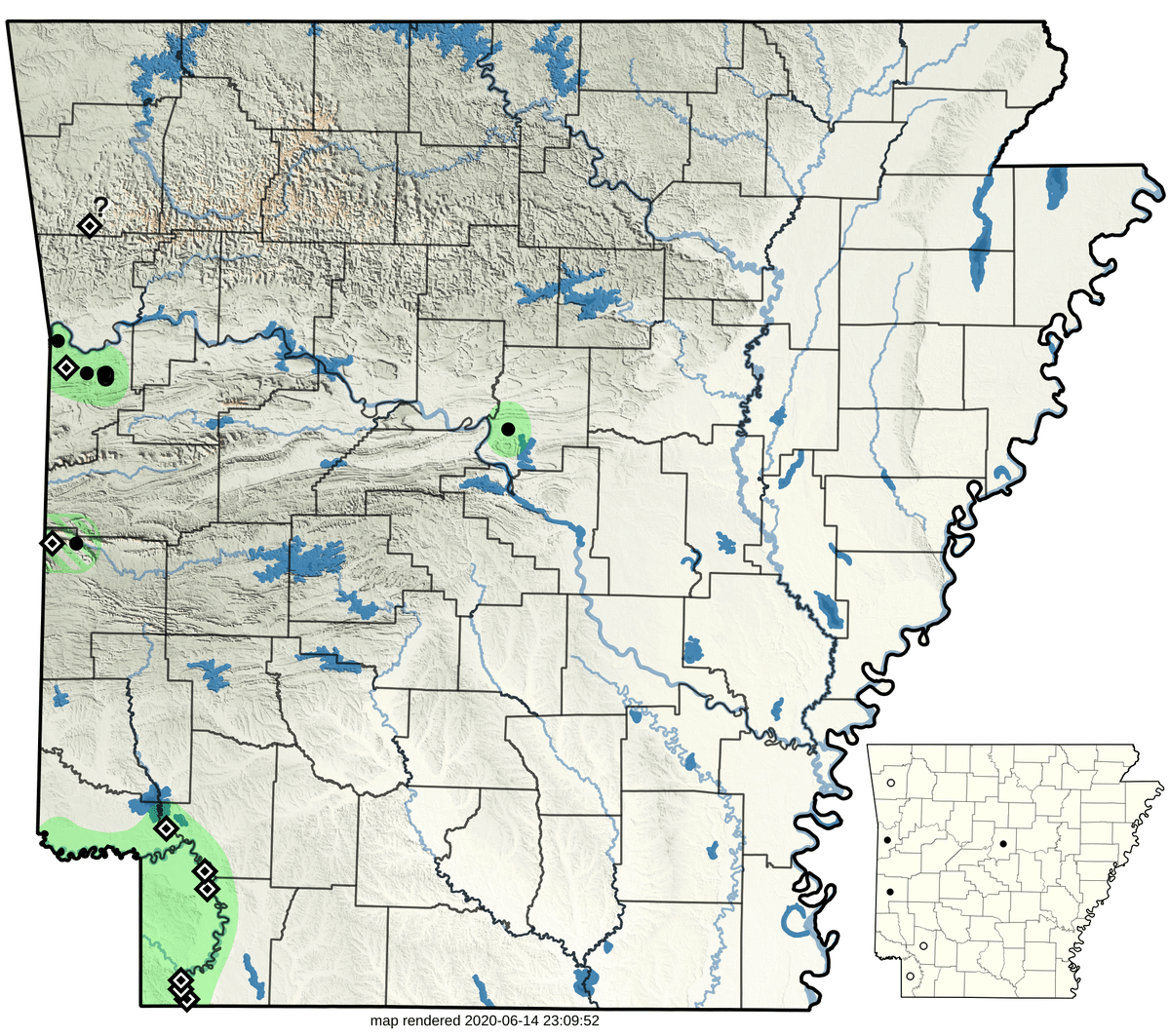
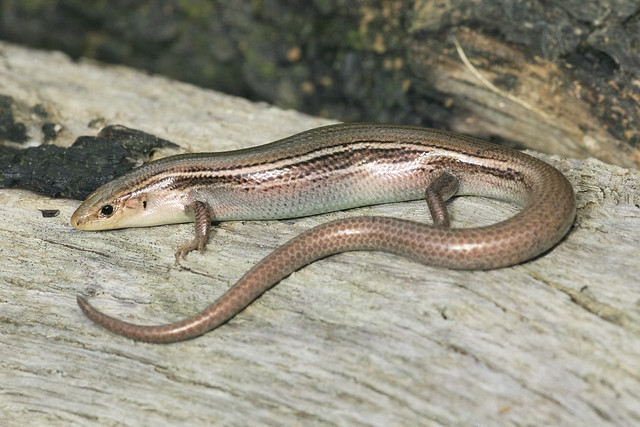
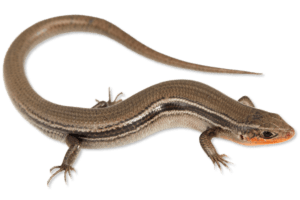
DescriptionThis species is a thinly-built, short-legged skink. General coloration is brown or tan with a lighter middorsal stripe and darker lateral stripes (no wider than a couple of scales rows) which are edged in white. In some older individuals, the stripes become less evident. Males will develop reddish cheeks during the breeding season. Young look similar to adults, but with bright blue tails. This species looks very similar--if not identical--to other skink species found in Arkansas and examination of scales may be required to confirm identification. The Southern Prairie Skink has 2 postmental scales. A postnasal scale is absent. As young, this species may be called a Blue-tailed Skink (a term shared amongst several skink species). HabitatsWhile little is known about this species in Arkansas, in other parts of its range it seems to prefer areas of moisture, such as around rocks, leaf litter, or debris. It may be found in sandy, edge habitats between prairie and forest. Habits and Life HistoryThis species is rather secretive and quick to retreat from danger. It is thought to be most active just before sunrise. Breeding occurs in the spring. Females will lay eggs and brood them until hatching. Prey and Hunting TechniquesSmall insects comprise the bulk of the diet for this species. Prey is hunted actively. Temperament and DefenseIf approached, this species is quick to hide under some kind of cover, such as a rock or log. If capture is attempted, care must be taken since the tail is easily detached. The detached pieces will wiggle, providing a distraction to any would-be predator. Although a new tail will be regenerated, a lot of energy is required for this process and a regrown tail will always be suboptimal to the original. ConservationThis species is considered rare by the Arkansas Natural Heritage Commission and has been identified as a species of greatest conservation need by the Wildlife Conservation Strategy group. Sparse locality records have made it difficult to identify conservation needs. State Distribution and Abundance
Gallery- no Flickr images available for display - Contributors
Bibliography
Discussion |