© 2002-2010
|
Western Wormsnake (Carphophis vermis)
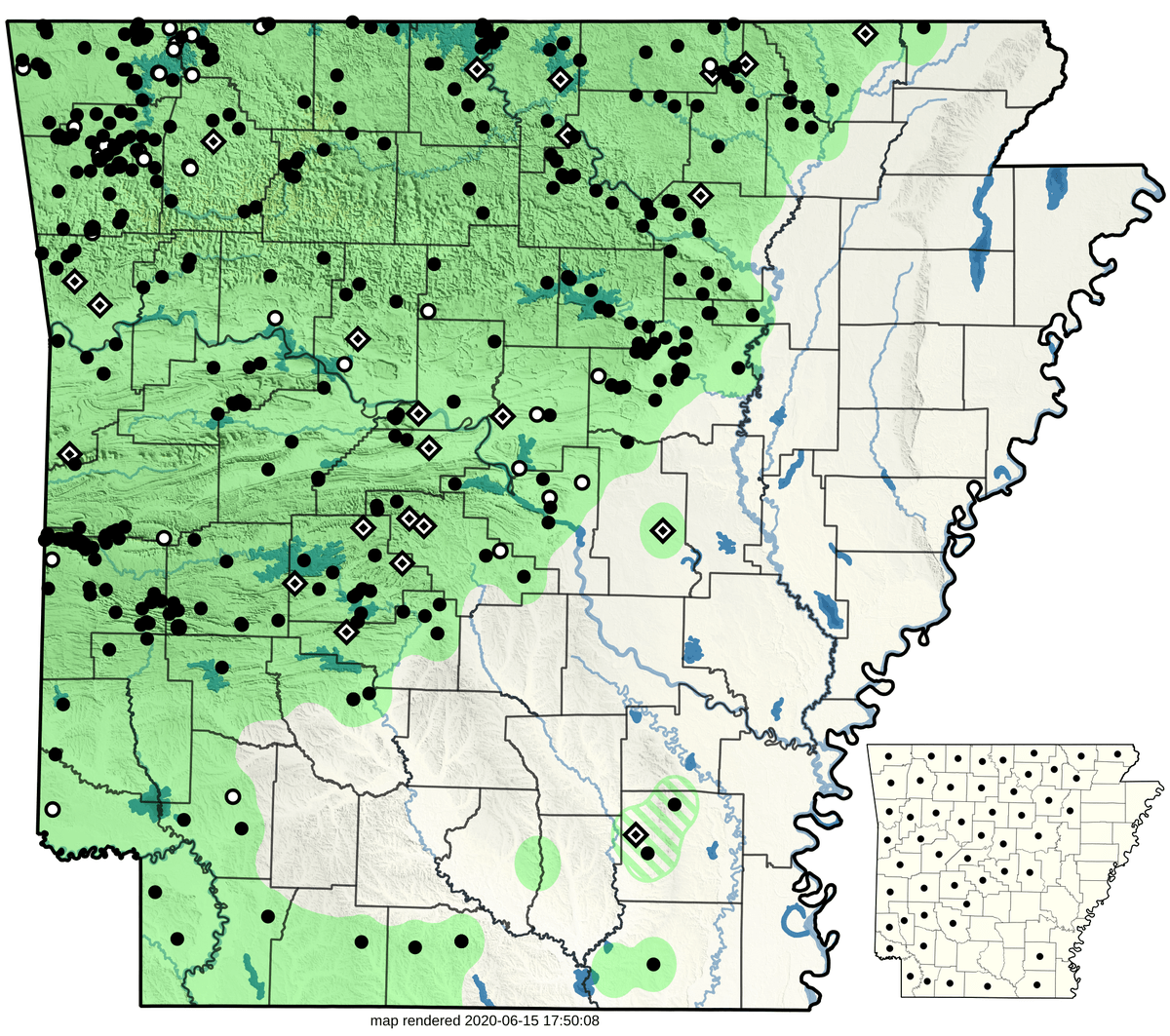
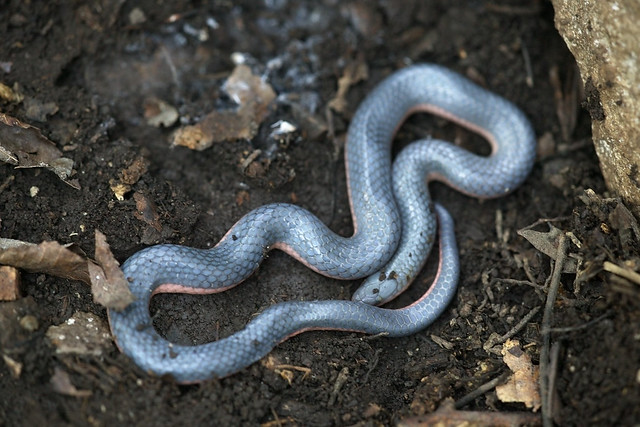
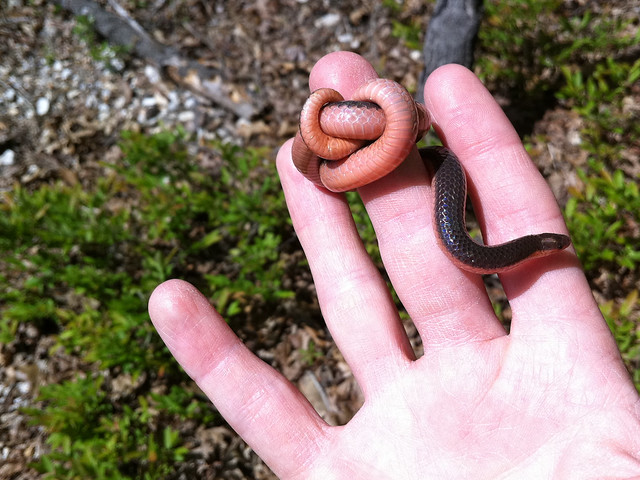
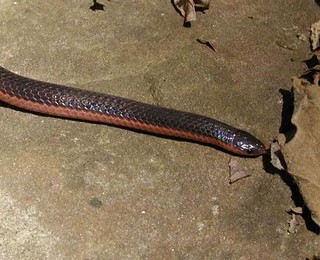
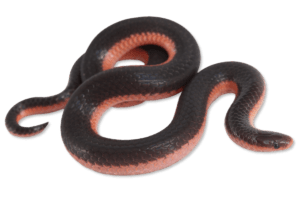
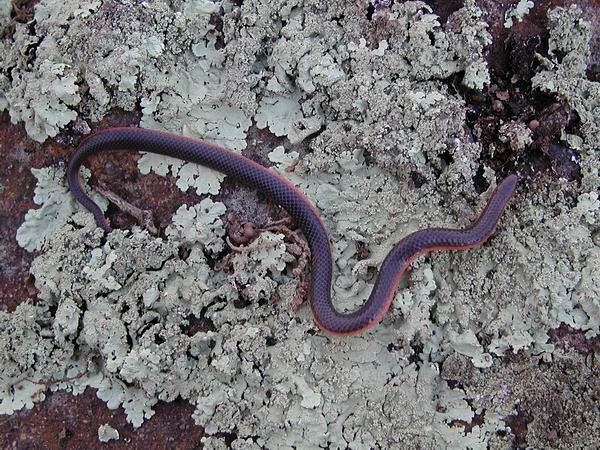
DescriptionThis small, worm-like snake is identified by a plain dark purplish-black dorsal coloration with a plain, bright pink belly. Its snout and tail are very pointed. It rarely grows longer than about 25cm (9.8 inches). It is not easily distinguished from the Midwestern Wormsnake, which has a lighter, brown dorsal coloration and lighter pink belly. In the Western Wormsnake, the pink belly coloration extents up to the 3rd row of dorsal scales, whereas on the Midwestern Wormsnake the pink belly coloration extents up only to the 1st or 2nd row. During a shed cycle, the dorsal coloration may appear gray. HabitatsThis species is rarely seen exposed. It is fossorial; burrowing in moist soil or under the leaf litter. I commonly find this species by lifting boards, rocks, or other debris that is sitting loosely on the ground. Habits and Life HistoryDue to the preferred habitat of this small snake, it is difficult to study in a natural setting. Human encounters usually occur during excavation work, gardening, or when picking up debris. This species is thought to having mating in the fall. Females retain the sperm and fertilize their eggs in the Spring. The eggs are likely laid sometime in early summer, and hatching in the late summer. Prey and Hunting TechniquesThis species burrows through loose soil in search of soft-bodied prey, especially earthworms. It uses a "grab-and-eat" technique for subduing and swallowing its food. Temperament and DefenseThis species is secretive and will never feel completely comfortable exposed. If one happens to be "turned up" by a predator, their first defense is a small size and dark dorsal coloration. Upon getting flipped over, their bright pink belly acts as a second line of defense; a brightly colored symbol of danger (in this case a bluff!). When handled, this species is not known to bite in defense, but will almost certainly expel excrement and a foul-smelling musk. One may try to burrow through fingers or even poke a handler's hands with its sharp tail. ConservationThis species is fairly common in Arkansas, even if rarely seen. There are no immediate threats to the species as a whole. Because of its small size and unassuming nature, even people who are fearful of snakes generally find little offense when they see one. I think this species often gets misidentified as some kind of strange earthworm. State Distribution and AbundanceGallery
Contributors
Bibliography
Discussion |