ReptilesAmphibians
© 2002-2013 |
Western Mudsnake (Farancia abacura reinwardtii)
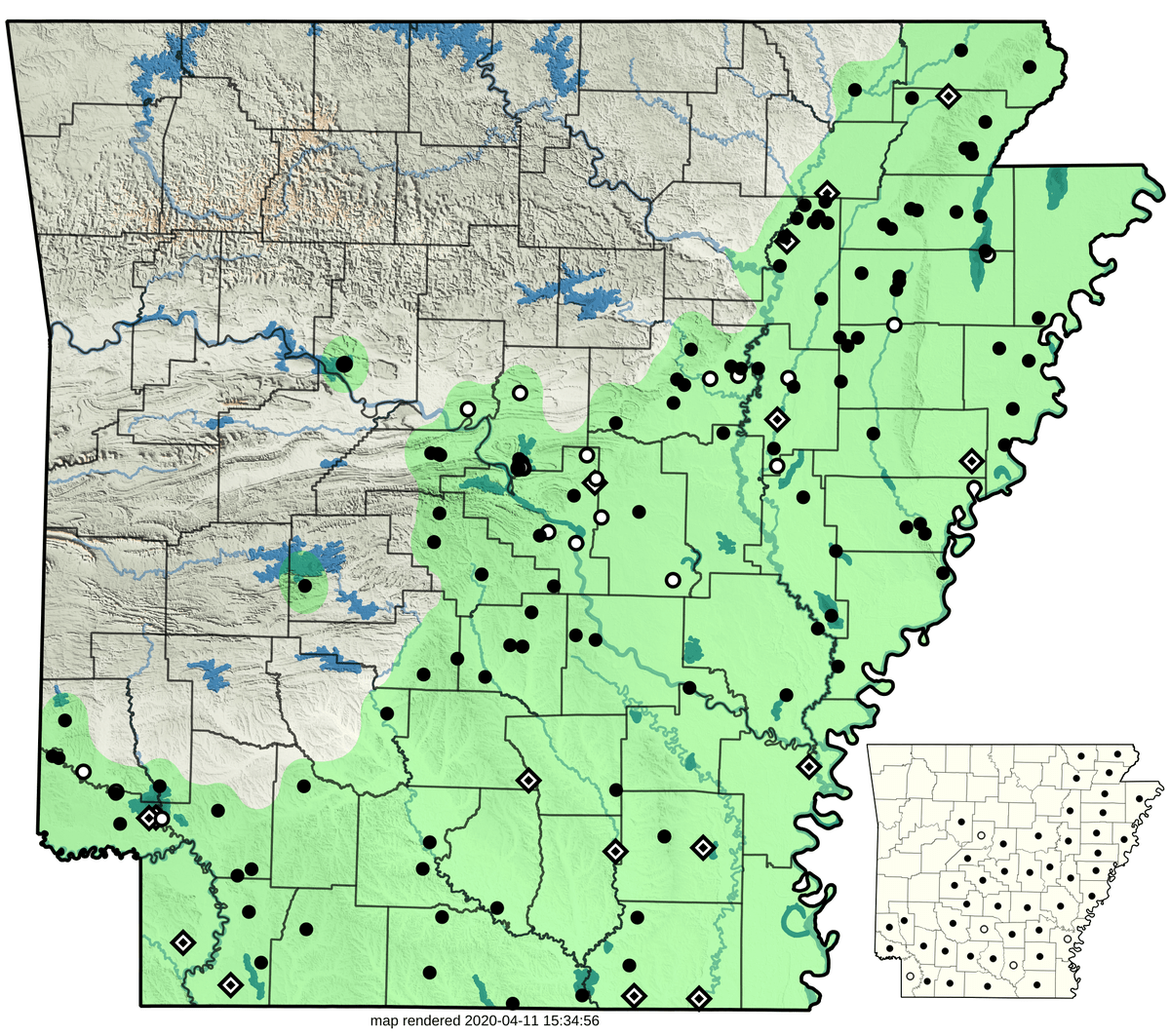
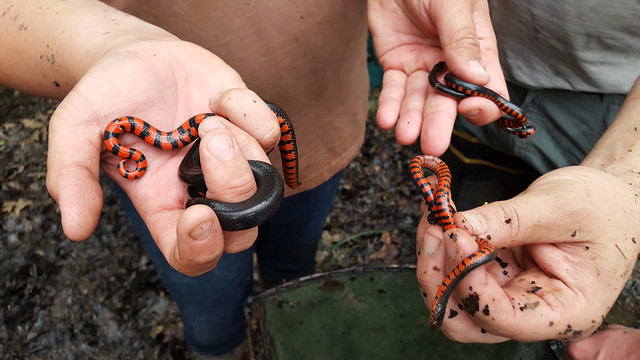
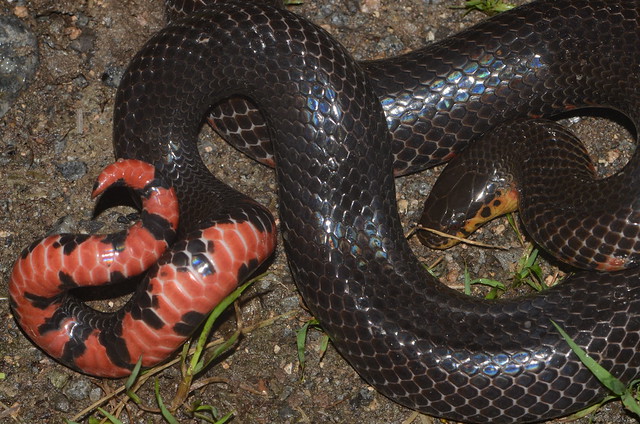
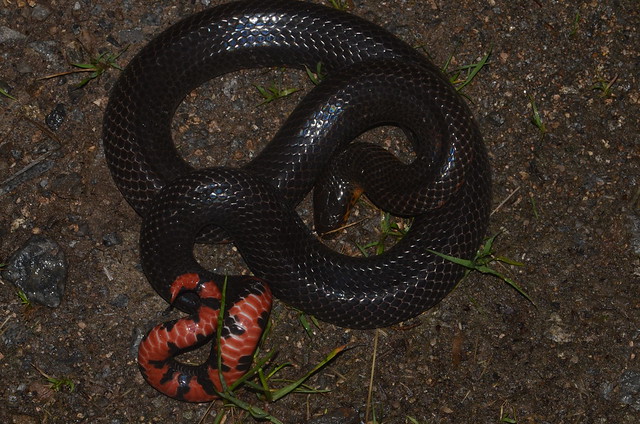
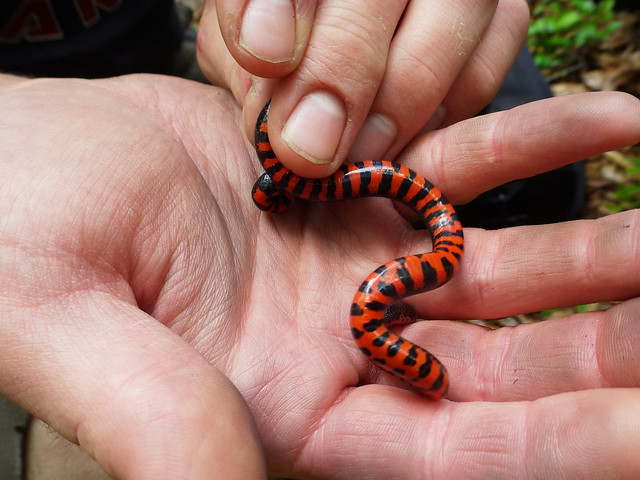
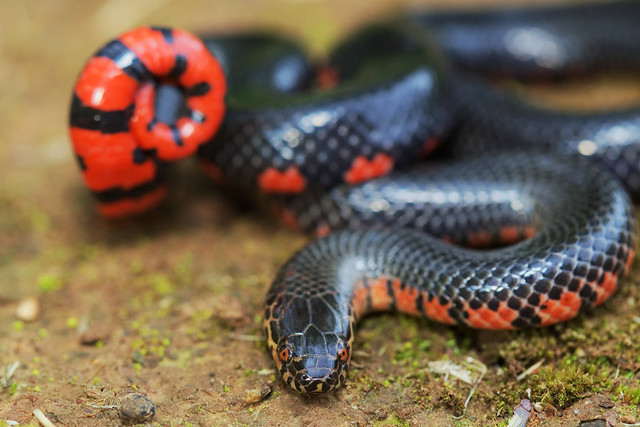
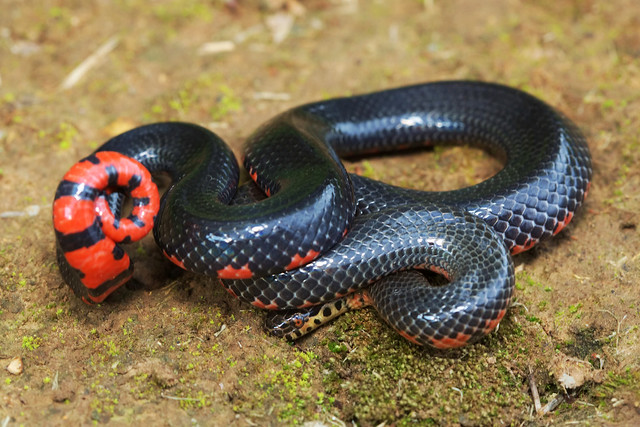
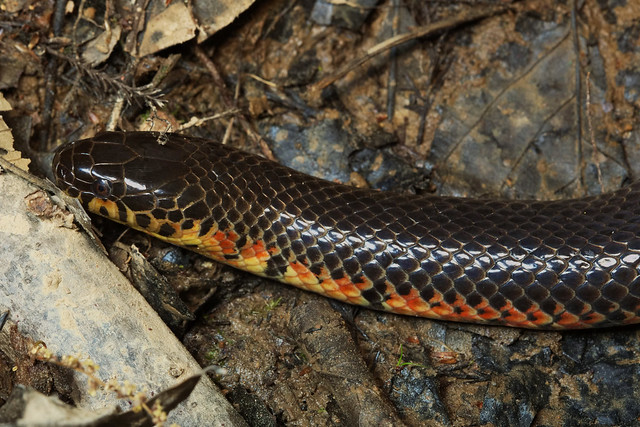
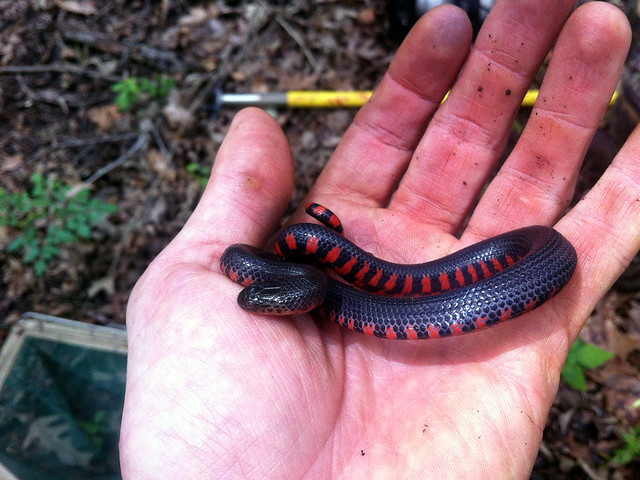
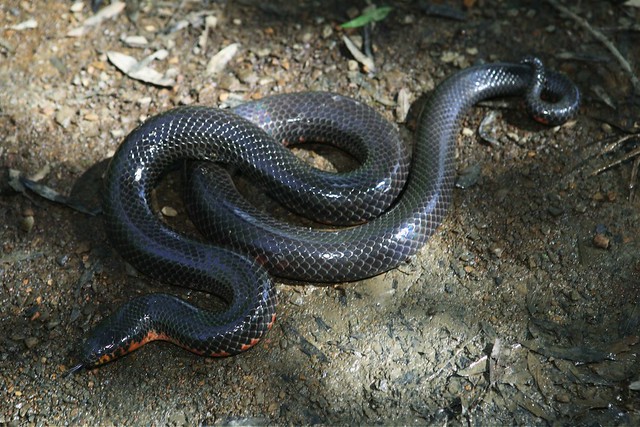
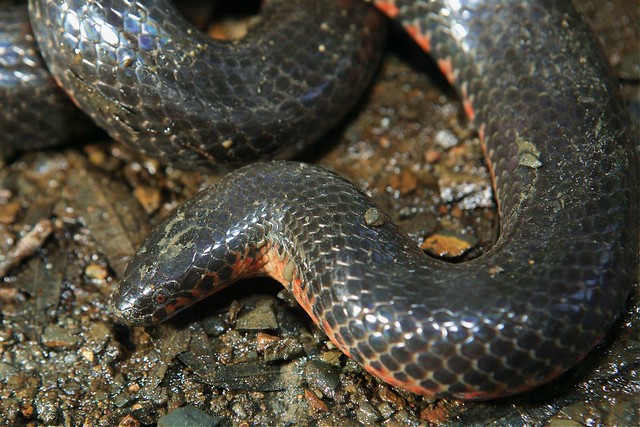
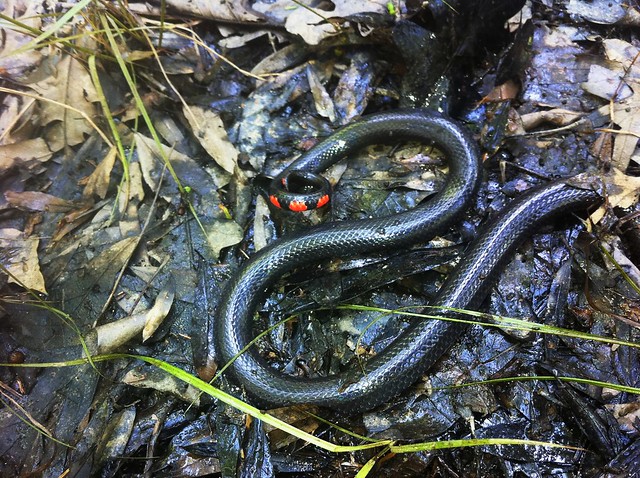
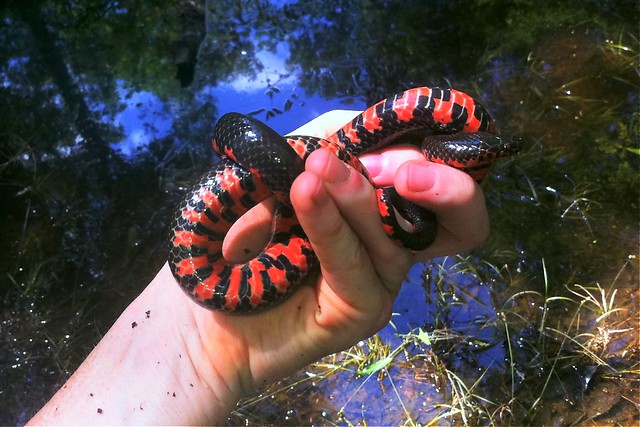
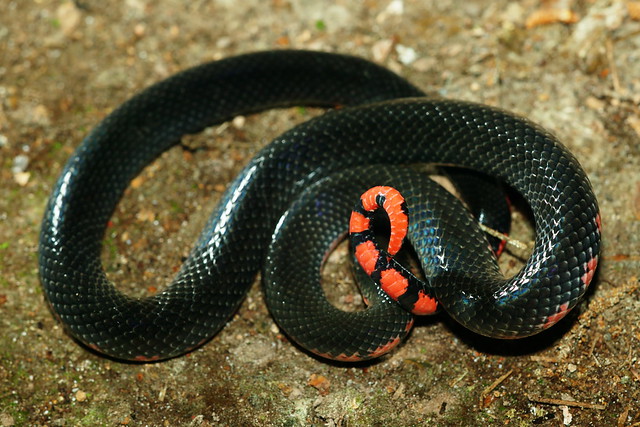
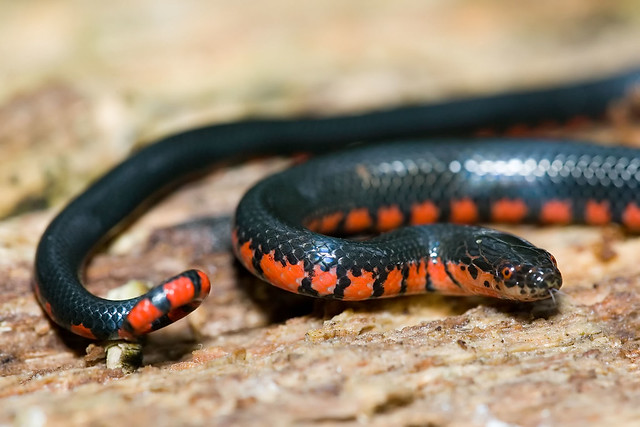
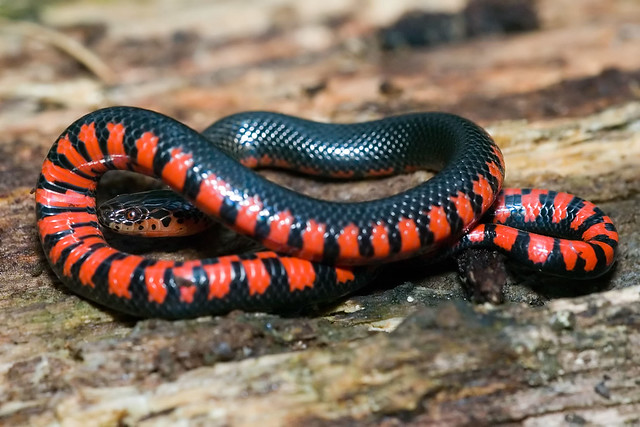
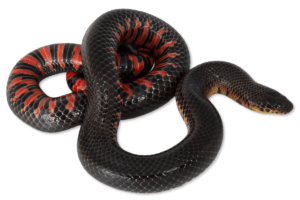
DescriptionThis thick-bodied, highly aquatic species is predominately black with a red and black banded (sometimes checkerboarded) belly. The red coloration extends onto the sides. Scales are shiny and smooth, creating an iridescent sheen. The tail is relatively short but sharply pointed. While other "water snakes" of the genera Agkistrodon, Nerodia, and Regina share the same aquatic habitat, the "slick look" of the Mudsnake along with the red side-blotches and belly coloration are usually sufficient for easy identification. However, the venomous Cottonmouth may look just similar enough to the untrained eye that caution is warranted. This species is also known as the Stinging Snake, Horn Snake, or Hoop Snake. ![]() HabitatsTrue to its name, this is a highly aquatic species of muddy, swampy areas, especially places with thick aquatic vegetation. Habits and Life HistoryThis species is a burrower and quite secretive. It is reported to be more active at night after heavy rains. When at rest, it may lay in a loose coil; perhaps providing the impetus for the erroneously held belief that it can grab its own tail and roll like a wheel (as a "hoop snake"). Breeding occurs in the spring, with females laying their eggs in summer. Something of a rarity for North American snakes, females remain with their clutches until hatching. Prey and Hunting TechniquesAlthough fish and tadpoles are documented prey for the species, it specializes on eating larger, aquatic amphibians (chiefly amphiumas and sirens). This species presumably "burrows around" for its prey, relying more on taste and feel than sight. Sharply curved teeth assist in capturing and subduing its slippery prey. Temperament and DefenseThe primary defense for this species is its burrowing, secretive nature. If disturbed, it is most likely to display head-protecting behavior by coiling into a mass. From this position, it may curl up its tail to reveal the red and black coloration underneath. In nature, bold colors and a contrasting pattern (such as the red and black belly of a Mudsnake) is often a sign of something "dangerous" or perhaps "bad tasting". One might imagine a Mudsnake being dug up from the mud by a potential predator and in the process flipped over. The flash of red and black may cause just enough hesitation from the potential predator for the snake to escape. This snake is well-known for being a gentle, docile snake. It is not known for biting in defense, though it may jab and prod harmlessly with its sharp tail. This behavior (of a "stinging snake" or "horn snake") has led to the false belief that it can sting with a venomous tail. Although impressive in size, it is a harmless snake. ConservationThis species holds no special status in the state, albeit it is rarely encountered. The drainage of wetlands may pose a threat to this denizen of swampland. As a large, misunderstood snake, it often does not fare well in encounters with humans. State Distribution and Abundance
GalleryContributors
Bibliography
Discussion
|