Family: Crotalidae (Pitvipers)
Genera: Agkistrodon (American Moccasins), Crotalus (Rattlesnakes), and Sistrurus (Massasauga and Pygmy Rattlesnakes)
|
|
|
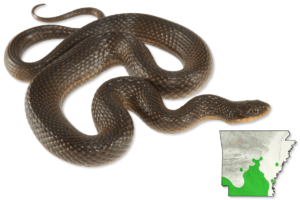
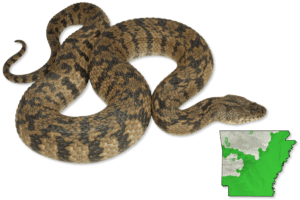
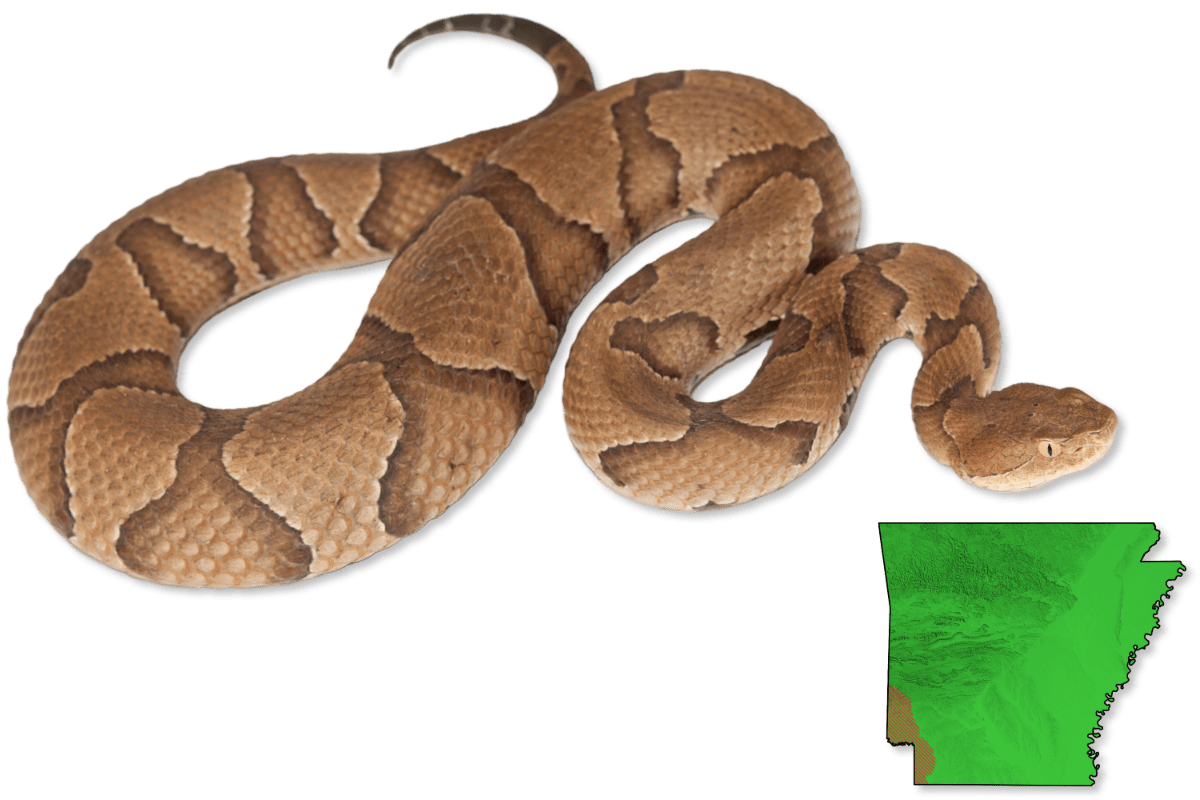
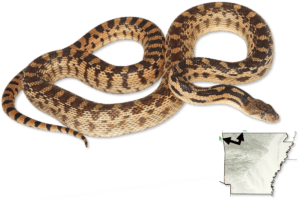
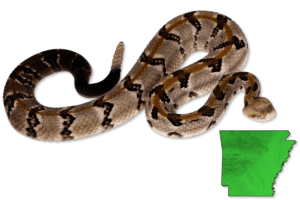
| Tan with darker brown hourglass-shaped bands. Bands sometimes thinly bordered with white. Belly mostly patternless, but sometimes with lower spots between bands extending onto belly. Heat-sensing pits. Pupils elliptical. Juveniles with bright yellow tail.
|
|
|
|
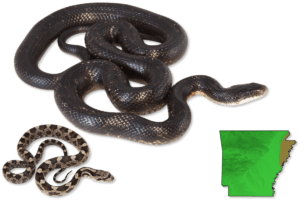
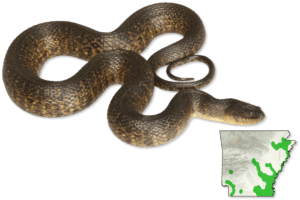
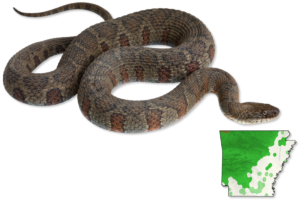
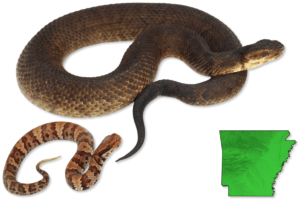
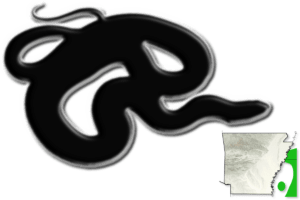
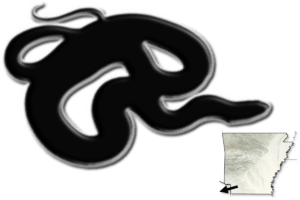
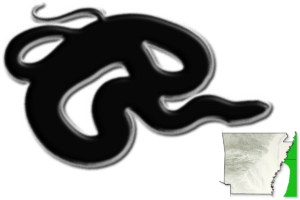
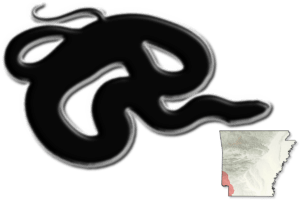
| Aquatic. Black or with dark, obscured patterning. Dark stripe from nostril to neck. Labial scales lighter and without vertical bars. Heat-sensing pits. Pupils elliptical. May gape white "cotton mouth" when disturbed. Buoyant swimmer. Juveniles with bold pattern contrast and bright yellowish-green tail.
|
|
|
|
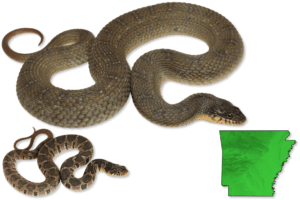
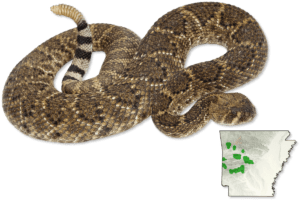
| Mottled brown, tan, and black with large, roughly diamond-shaped middorsal blotches. Blotches thinly etched with white except toward tail. Heat-sensing pits. Eyes elliptical and between light, diagonal stripes. "Coon tail" with rattle. For current research, click here.
|
|
|
|
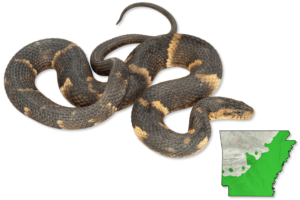
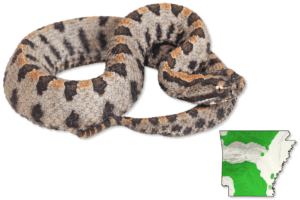
| Grayish, yellowish, or light brown background with dark, jagged crossbands and rust-colored middorsal stripe. Head with darker band from eye to jawline (less obvious in some individuals). Heat-sensing pits. Eyes elliptical. "Velvet tail" with rattle.
|
|
|
|
| Smallish. Gray with black crossbands and rust-colored middorsal stripe. Crossbands usually incomplete with gaps along sides of body. Head boldly patterned. Heat-sensing pits. Eyes elliptical. Diminutive rattle.
|
|
|
|
Family: Elapidae (Coralsnakes, Cobras, and Kraits)
Genus: Micrurus (American Coralsnakes)
|
|
|
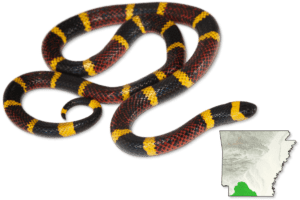
| Rare. Alternating black, red, and yellow bands so that "red touches yellow". Bands extend onto belly. Red bands often with specks of black. Snout all black and stubby with next band being yellow.
|
|
|
|
Family: Colubridae (Harmless Egg-Laying Snakes)
Genera: Cemophora (Scarletsnakes), Coluber (North American Racers), Lampropeltis (Kingsnakes), Masticophis (Coachwhips and Whipsnakes), Opheodrys (Greensnakes), Pantherophis (North American Ratsnakes), Sonora (North American Groundsnakes), and Tantilla (Black-headed, Crowned, and Flat-headed Snakes)
|
|
|
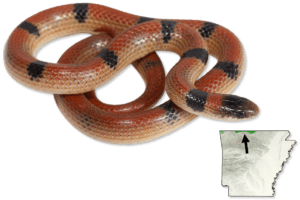
| Rare. Red touches black. Alternating black, red, and light-colored bands or blotches. Light-colored bands vary by individual from gray, to cream, to light orange. Head red. Snout sharply pointed. Belly uniform cream.
|
|
|
|
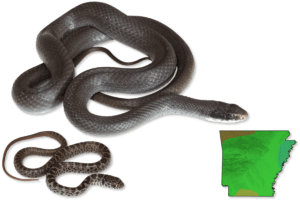
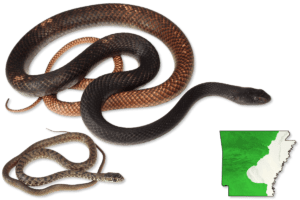
| Long, slender, and speedy. Uniform black, dark gray, or olive (rarely with speckling of lighter scales). Labial scales, chin, and neck usually lighter. Belly yellowish, cream, or black and unmarked. Juveniles blotched, fading to uniform olive toward tail.
|
|
Subspecies: Buttermilk Racer (C. c. anthicus) , Eastern Yellow-bellied Racer (C. c. flaviventris), Black-masked Racer (C. c. latrunculus), and Southern Black Racer (C. c. priapus)
|
|
|
| Brown with alternating, dark brown blotches (patterning is obscured in some individuals). Blotches thinly bordered with black. Head smallish. Belly with irregular checkerboard of brown and tan, sometimes with specks of orange. Juveniles like adults but with more contrast.
|
|
|
|
| Black with yellowish specks (usually one per scale). Belly with black and yellowish checkerboard pattern. Juveniles with more chainlike pattern.
|
|
|
|
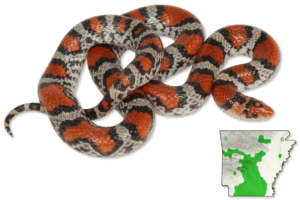
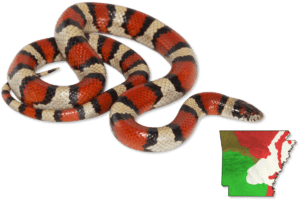
| Red touches black. Alternating black, red, and light-colored bands or blotches. Light-colored bands vary by individual from gray, to cream, to light orange. Head variable but almost never all black. Snout rounded. Belly with checkerboard pattern.
|
|
Subspecies: Louisiana Milksnake (L. t. amaura) and Red Milksnake (L. t. syspila)
|
|
|
| Long, large, and speedy. Head and 1/3 of body black, changing to brown "leather whip" appearance toward tail (rare individuals are all black). Belly usually pinkish and mostly unmarked. Juveniles with irregular dark crossbars, fading to uniform tan toward tail.
|
|
|
|
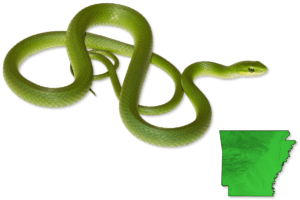
| Mostly arboreal. Pencil-thin. Uniform green. Long tail. Belly light green, cream, or yellowish.
|
|
|
|
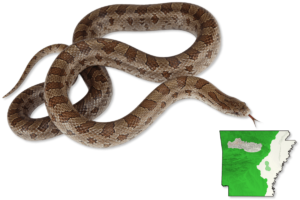
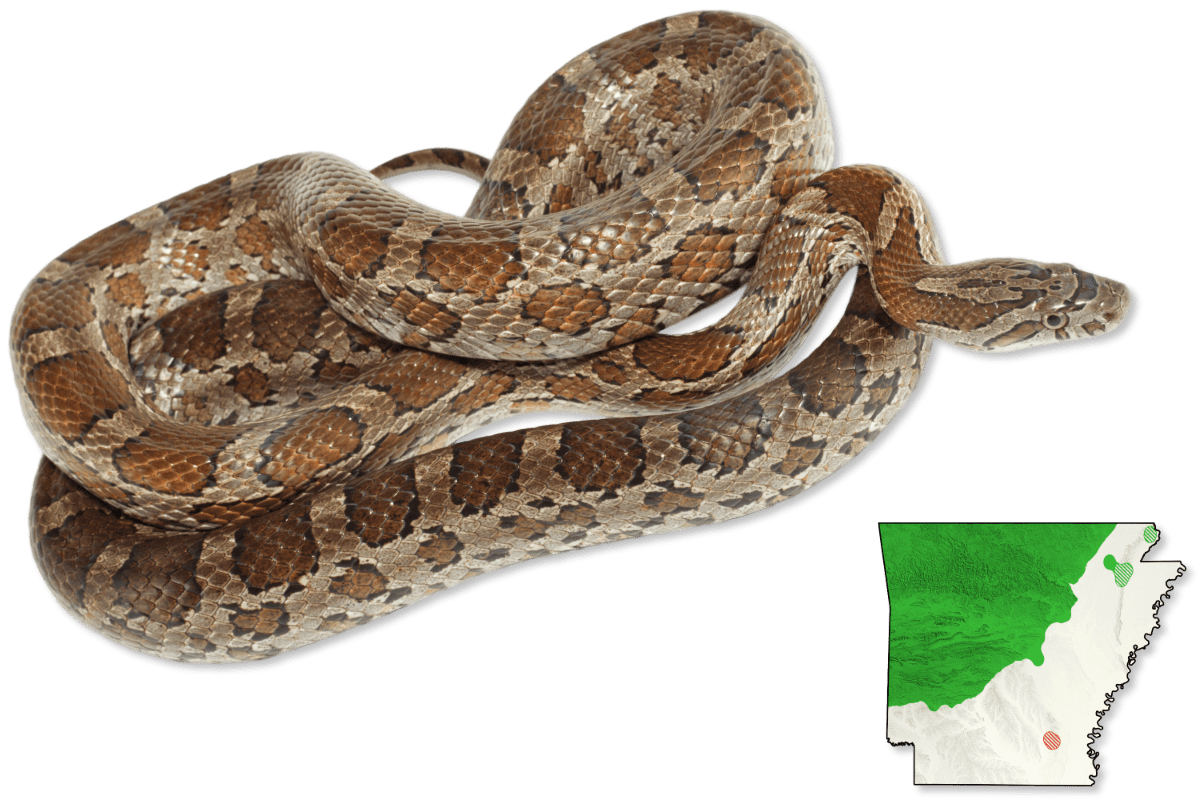
| Grayish-brown with large, alternating, dark brown blotches. Blotches often bordered with black. Spearhead-shaped mark on head. Belly with irregular checkerboard of black and white, similar to maize. Juveniles like adults with black bar through eye extending past jawline onto neck.
|
|
|
|
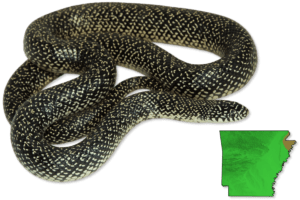
| Large. Mostly black, often with specks of cream or pink between scales. Labial scales, chin, and neck cream. Belly with irregular checkerboard of black and white. Juveniles gray with dark blotches and a black bar that runs through eye to jawline.
|
|
|
|
| Rare. Grayish-brown with large, alternating, dark blotches. Blotches often bordered with black. "Spearhead" mark on head. Belly with irregular checkerboard of black and white, similar to maize.
|
|
|
|
| Rare with very few vouchered specimens in AR. Small. Fossorial. Glade-dweller. Highly variable (uniform tan with faint reddish stripe, or with one neck crossbar, or with dark crossbars running the length of the body, etc.). Belly uniform cream.
|
|
|
|
| Extremely small. Fossorial. Glade-dweller. Uniform tan. Head pointed and darker. Belly salmon-colored.
|
|
|
|
Family: Dipsadidae (Rear-Fanged Snakes)
Genera: Carphophis (North American Wormsnakes), Diadophis (Ring-necked Snakes), Farancia (Mudsnakes and Rainbow Snakes), and Heterodon (North American Hog-nosed Snakes)
|
|
|
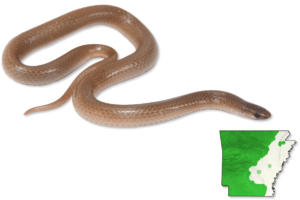
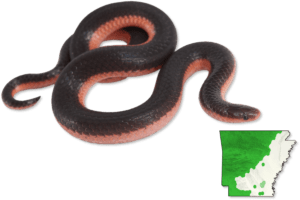
| Rare. Small. Fossorial. Uniform brown (grayish-blue during shed cycles). Belly uniform pale pink, extending onto 2 dorsal scale rows.
|
|
|
|
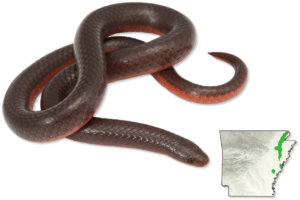
| Small. Fossorial. Uniform black (grayish-blue during shed cycles). Belly uniform bright pink, extending onto 2-3 dorsal scale rows.
|
|
|
|
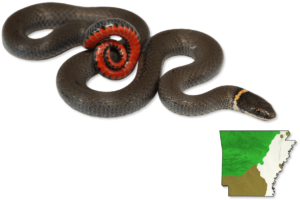
| Small. Fossorial. Uniform gray or black except for yellow ring around neck. Belly yellow (shifting to red under tail), usually with variable pattern of black dots.
|
|
| Subspecies: Prairie Ring-necked Snake (D. p. arnyi) and Mississippi Ring-necked Snake (D. p. stictogenys)
|
|
|
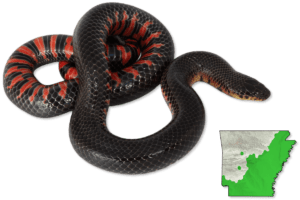
| Aquatic. Large-bodied. Black and shiny. Belly with red bands that extend onto sides.
|
|
|
|
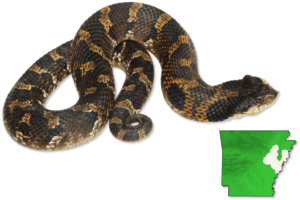
| Highly variable, with morphs either "solid" or "blotched". Thick-bodied. Strongly upturned snout. Primitive dark "eye spots" on neck (obscured in darker individuals). Exaggerated defensive display of flattening neck and body, hissing, and finally playing dead. Juveniles always boldly blotched.
|
|
|
|
Family: Natricidae (Harmless Live-Bearing Snakes)
Genera: Nerodia (North American Watersnakes), Regina (Crayfish Snakes), Storeria (North American Brown Snakes), Thamnophis (North American Gartersnakes), and Virginia (North American Earthsnakes)
|
|
|
| Rare. Aquatic. Greenish-brown color. Belly with cream half-circles. Subocular scales.
|
|
|
|
| Aquatic. Plain brown, sometimes with faint crossbars. Belly uniform yellow. Juveniles blotched with dark spots on neck alternating with dorsal blotches.
|
|
| Subspecies: Yellow-bellied Watersnake (N. e. flavigaster) and Blotched Watersnake (N. e. transversa)
|
|
|
| Aquatic. Broad, irregular, dark crossbands. Background usually orangish. Belly light with irregular checkerboard of redish rectangles.
|
|
|
|
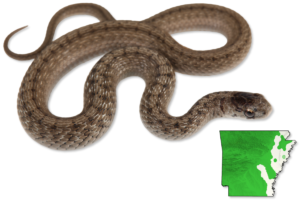
| Aquatic. Net-like pattern. Belly with dark half-circles.
|
|
|
|
| Aquatic. Dark dorsal bands toward head becoming checkerboard toward tail. Individual variation in band and background color: browns, tans, reds, and yellows. Belly mottled with dark crescents.
|
|
|
|
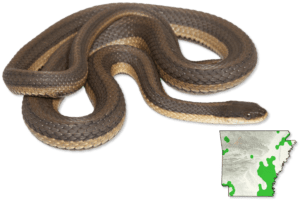
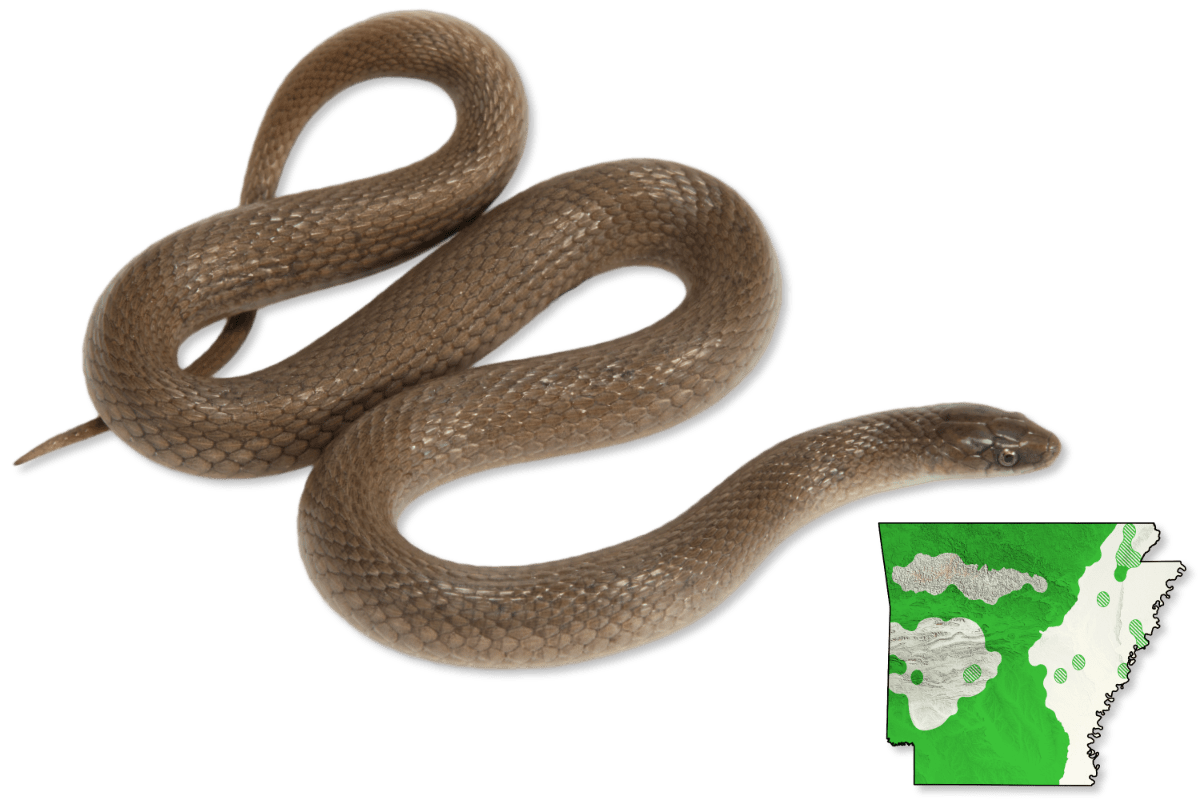
| Rare. Aquatic. Plain brown with a faint middorsal stripe and thick lateral stripes. Belly usually uniform cream.
|
|
|
|
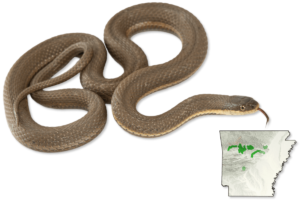
| Rare. Aquatic. Plain brown. Belly yellow (extending just onto sides) with 2 rows of dark half-circles.
|
|
|
|
| Rare. Aquatic. Plain grayish brown with pale yellow stripe just above belly. Belly with 2 rows of dark spots, more distinct near neck.
|
|
|
|
| Small. Fossorial. Coloration variable (browns, tans, and grays) with short crossbars connecting two rows of dots. Dark spots below eye and on temporal region. Belly cream.
|
|
|
|
| Small. Fossorial. Coloration variable (browns, tans, and grays), usually with middorsal stripe and rows of fine dots running lengthwise. Pale spots on neck. Belly red (in most individuals).
|
|
| Subspecies: Florida Red-bellied Snake (S. o. obscura) and Northern Red-bellied Snake (S. o. occipitomaculata)
|
|
|
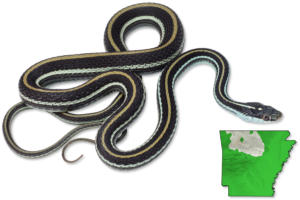
| Three stripes of yellow, orange, or sometimes bluish. Background color black. Labial scales uniform cream. White spot just in front of eye. Belly unmarked.
|
|
|
|
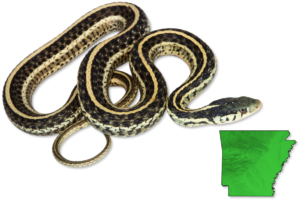
| Three stripes of yellow or orange. Background color variable and sometimes checkerboard in appearance. Black bars between labial scales. Belly mostly patternless, but with some black specks.
|
|
|
|
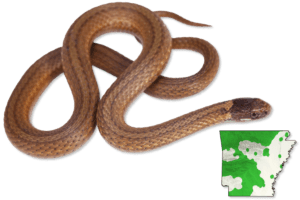
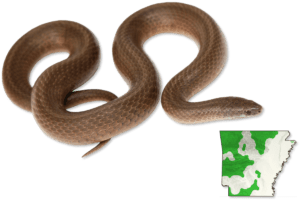
| Small. Fossorial. Plain brown. Belly uniform light tan. Dorsal scales strongly keeled. 5 supralabial scales, 1 postocular scale, and 1 internasal scale.
|
|
|
|
| Small. Fossorial. Plain brown with very faint middorsal stripe. Belly uniform light yellow. Dorsal scales weekly keeled. 6 supralabial scales, 2 postocular scales, and 2 internasal scales.
|
|
|
|
~ Hypothetical Occurrence ~
|
|
|
| Rare with no vouchered specimen for AR. Red touches black. Alternating black, red, and light-colored bands or blotches. Light-colored bands vary by individual but are typically white or light yellow. Head mostly red. Snout rounded.
|
|
|
|
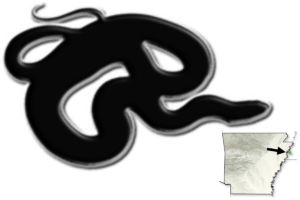
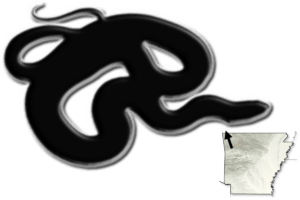
| Rare with no vouchered specimen for AR. Black with faint yellowish specks (usually one per scale) or chainlike pattern. Belly with black and yellowish checkerboard pattern. Juveniles with more defined chainlike pattern.
|
|
|
|
| Rare with no vouchered specimen for AR. Orangish brown with large, alternating, dark blotches. Blotches often bordered with black. Spearhead-shaped mark on head. Belly with irregular checkerboard of black and white, similar to maize.
|
|
|
|
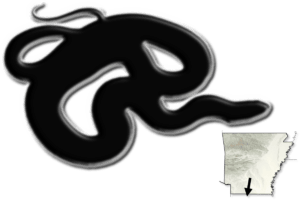
| Rare with no vouchered specimen for AR. Large Mostly black, but retaining some juvenile patterning Labial scales, chin, and neck cream Belly with irregular checkerboard of black and white Juveniles gray with dark blotches and a black bar that runs through eye to jawline.
|
|
|
|
| Rare with no vouchered specimen for AR. Very large and powerfully built. Tan to yellowish background with dark blotches. Blotches become more regular and banded toward tail. Dark line from eye to jawline. Can hiss loudly.
|
|
|
|
| Rare with no vouchered specimen for AR. Very large and powerfully built. Dull white background with black blotches. Blotches become more regular and banded toward tail. Can hiss loudly.
|
|
|
|
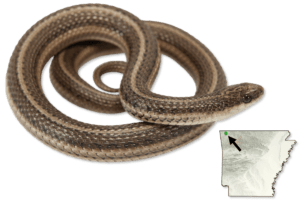
| Rare with no vouchered specimen for AR. Three light stripes on brown background. Belly with double row of half-circles.
|
|
|
|
|
|
|
|