ReptilesAmphibians
© 2002-2012 |
Queensnake (Regina septemvittata)
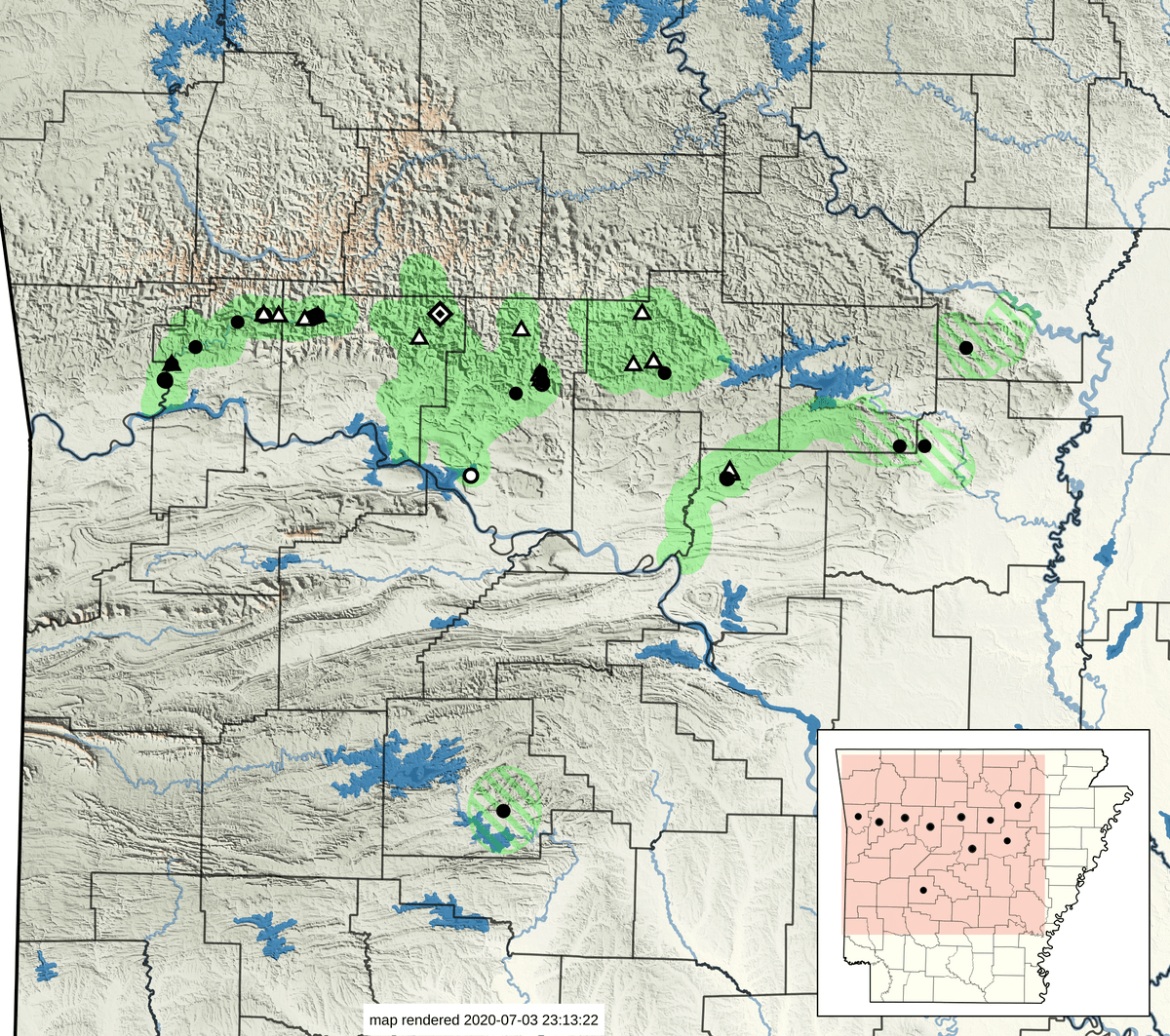
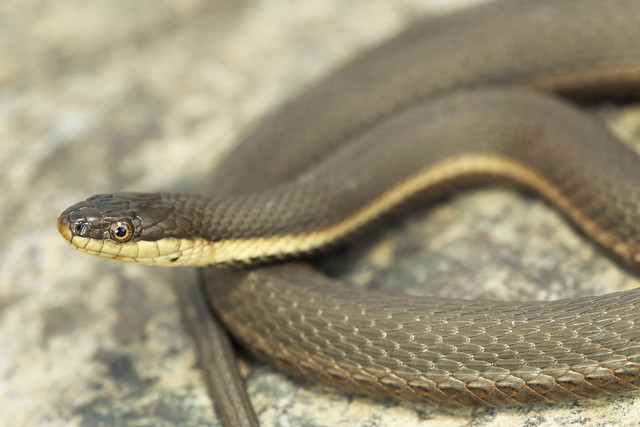
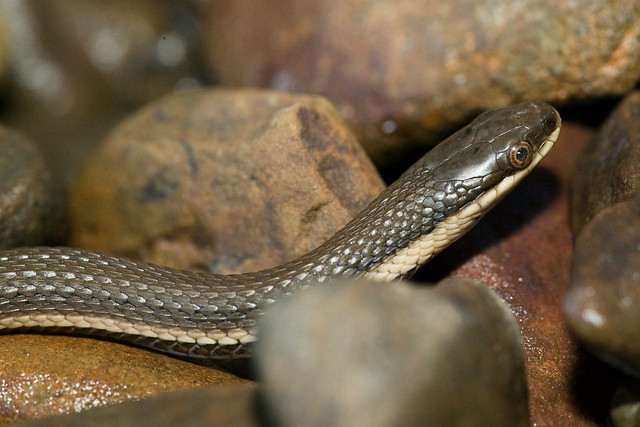
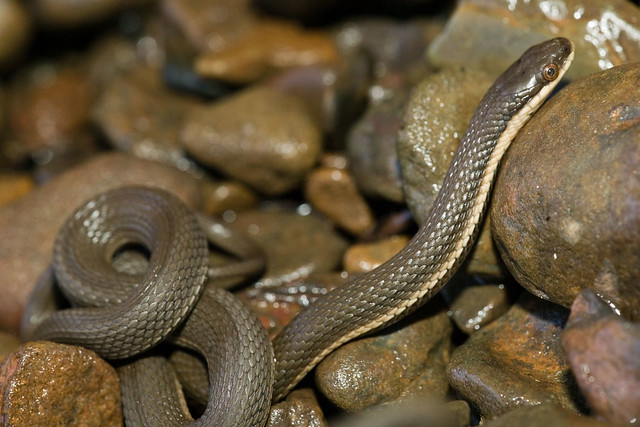
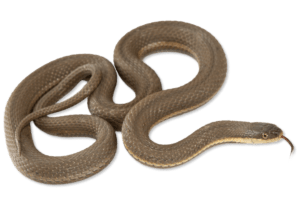
DescriptionThe queensnake is a slender, semi-aquatic snake. Arkansas specimens may reach approximately 660 mm total length. Females are typically longer and more stout than males. Dorsal body color ranges from dark brown to slate. Yellow ventrolateral stripes are present and the ventral surface is a cream to yellow color with four dark stripes. Scales are keeled and the anal plate is divided. HabitatsQueensnakes live around rocky creeks and rivers where they forage for crayfish. They are most often found under rocks near the water's edge, sometimes with other queensnakes or even with watersnakes (genus Nerodia). Habits and Life HistoryQueensnakes can be found foraging for crayfish or under rocks near the water. However, they are rarely found basking in the open the way that watersnakes of the genus Nerodia do. Females do not reach sexual maturity until their second year and may not mate until their third. Mating usually occurs in the spring with young born in August or September, but mating may occasionally take place in the fall. ![]() Prey and Hunting TechniquesQueensnakes are feeding specialists that consume freshly molted crayfish of the genus Cambarus. Crayfish may make up over 98% of the diet of queensnakes. They will eat other prey such as snails or minnows, but this is very rare. Temperament and DefenseQueensnakes are very docile snakes that do not bite even if picked up. However, they will thrash and emit a foul smelling musk. Their first line of defense, though, is to escape into the water. ConservationCurrently, queensnakes are not listed as threatened or endangered in Arkansas. However, queensnakes need clean, unpolluted water to live. Eutrophication from livestock and poultry runoff may pose a threat to Arkansas populations. Also, human recreation may have adverse effects on queensnakes. Population estimates in Arkansas are limited, but queensnakes are certainly rare and may be nearing extirpation. State Distribution and Abundance
GalleryContributors
Bibliography
Discussion |