ReptilesAmphibians
© 2002-2012 |
Red-bellied Snake (Storeria occipitomaculata ssp.)
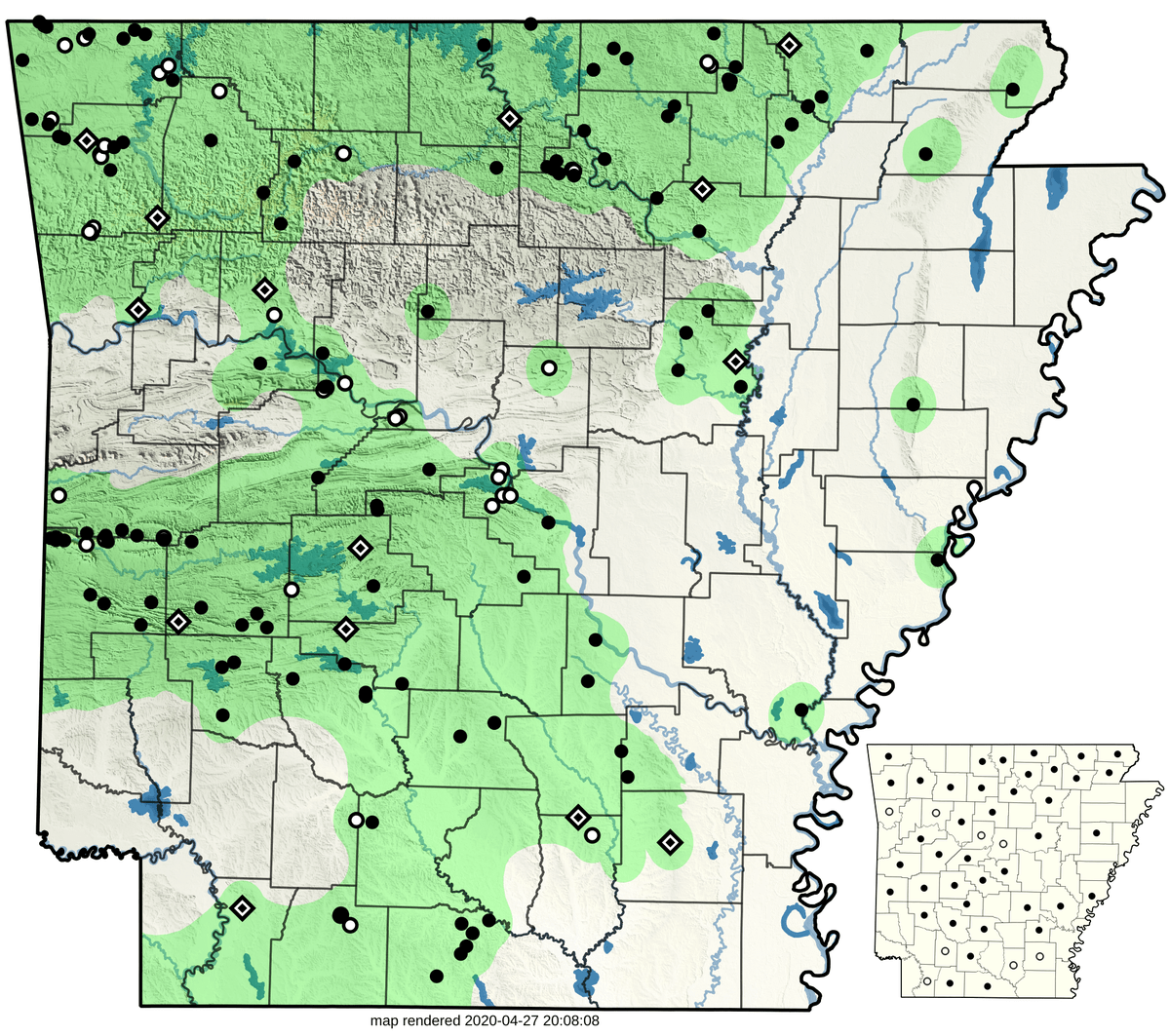
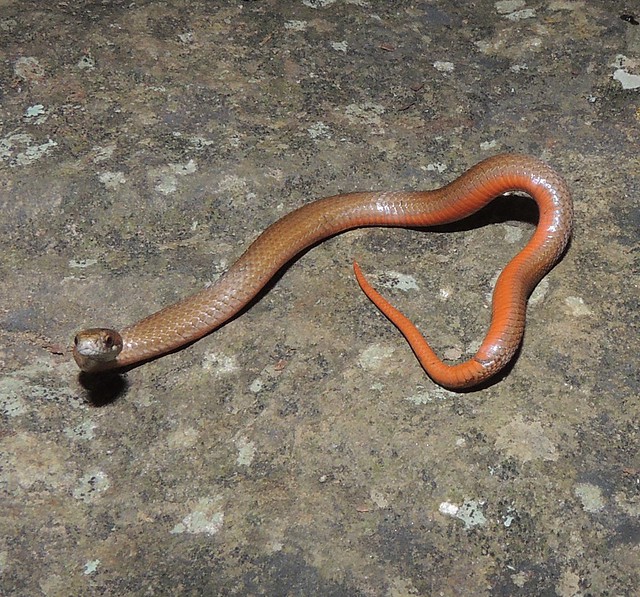
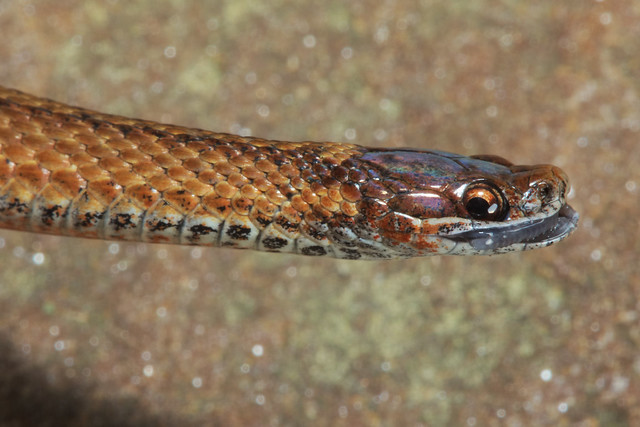
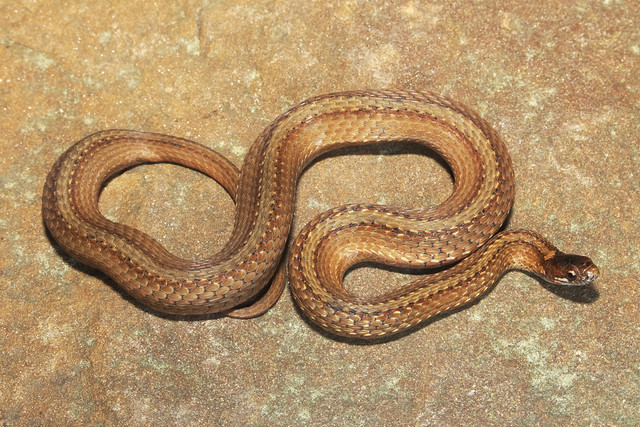
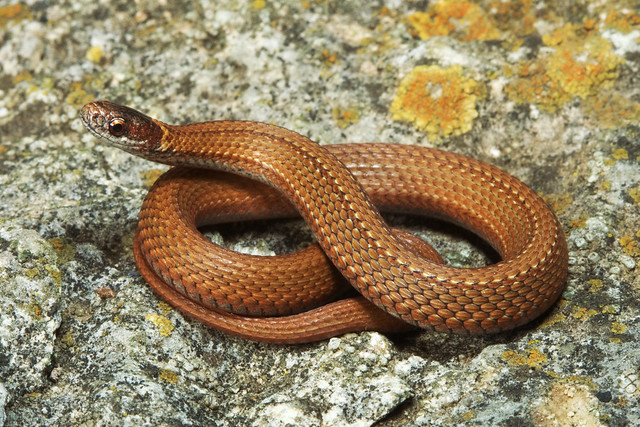
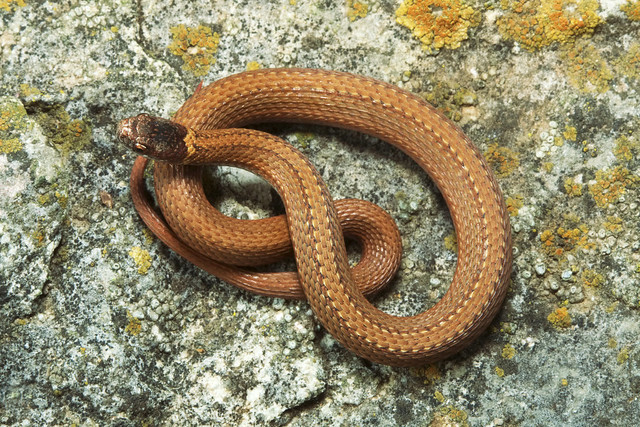
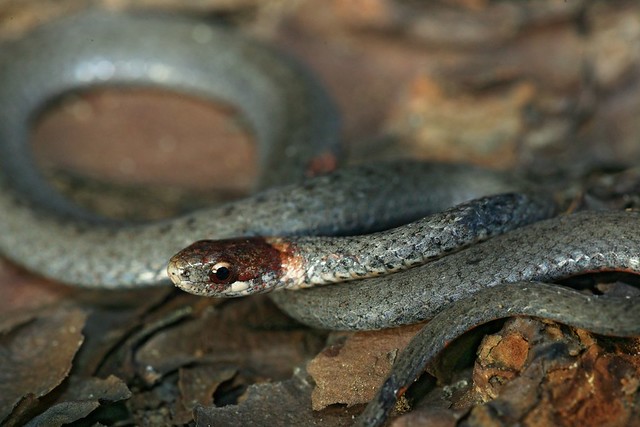
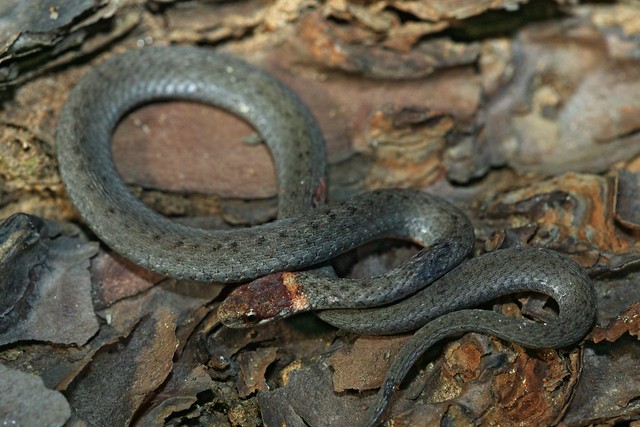
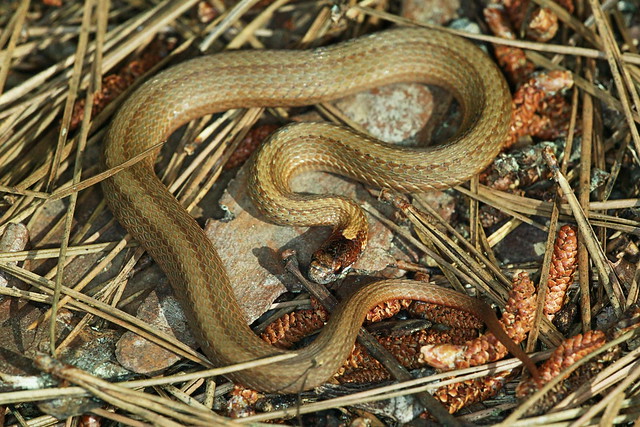
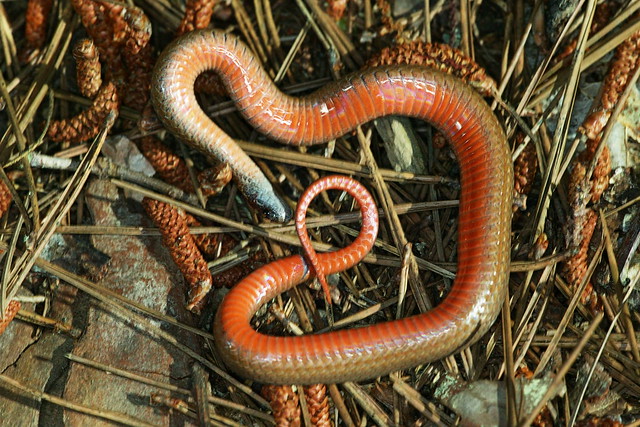
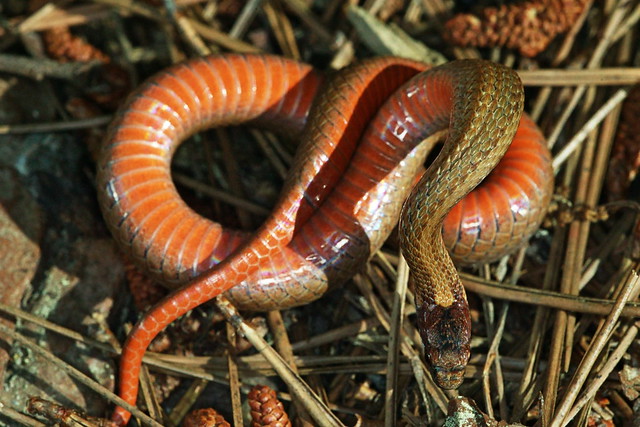
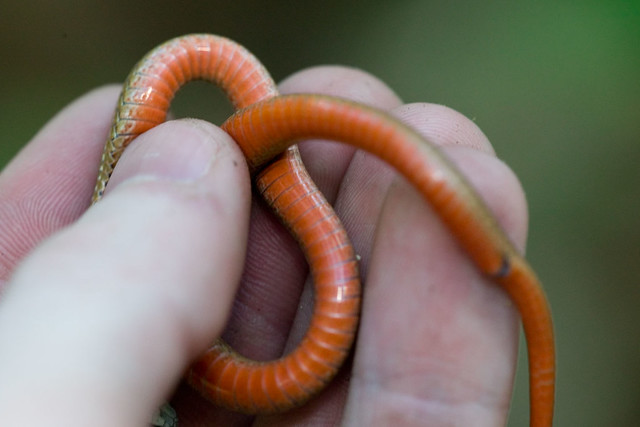
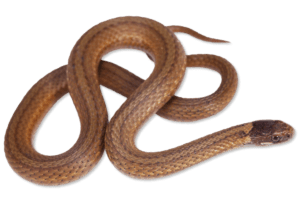
DescriptionThis small, secretive species comes in several color morphs, including a "red phase", "tan phase", "gray phase", "dark phase", etc. A lighter stripe often runs down the back with a dorsal patterning of dots that resembles a zipper. Pale spots occur on neck and just below and behind each eye. The belly coloration, as the species name indicates, is usually a bright red, but this may be less conspicuous in some individuals. Two subspecies, the Florida Red-bellied Snake (S. o. obscura) and Northern Red-bellied Snake (S. o. occipitomaculata) occur in the state. The Florida Red-bellied subspecies typically has a yellowish or orangish belly rather than red. Superficially, this species resembles the Midland Brownsnake (Storeria dekayi wrightorum), but has light--rather than dark--spots on the head and a red (sometimes yellow)--rather than cream--belly. ![]() HabitatsThis species may be found in a variety of moist environments, especially forest floors that have plenty of leave litter. They are sometimes found under rocks or logs in woodland or lowland habitats. Habits and Life HistoryThis nocturnal, secretive species is rarely seen exposed, but may be uncovered from a hiding place. It is occasionally observed crossing roads, especially during rainfall. This species presumably follows an activity pattern similar to other snakes. Emergence from hibernation occurs in early spring, followed almost immediately by a breeding season. Females give birth to live young (not eggs) in late summer to early fall. Prey and Hunting TechniquesThe preferred diet of this species includes earthworms, slugs, and soft-bodied insects. This species forages actively for its prey. It may sometimes be seen crawling along the side of a house or rock wall at night in search of prey. Temperament and DefenseThis species does not bite if handled gently, though they may poop and/or musk. Although camouflaged on top, if flipped over by a would-be predator, the bright belly may signal "I taste bad!". This may afford the snake just enough time to escape. However, if cornered they will sometimes flatten their body and even curl up their upper labial scales, presumably to look bigger and more fierce. ConservationThis species has no special protections in the state. Because of its small size and secretive nature, it rarely crosses paths with humans. State Distribution and Abundance
GalleryContributors
Bibliography
Discussion |