ReptilesAmphibians
© 2002-2013 |
Orange-striped Ribbonsnake (Thamnophis proximus proximus)
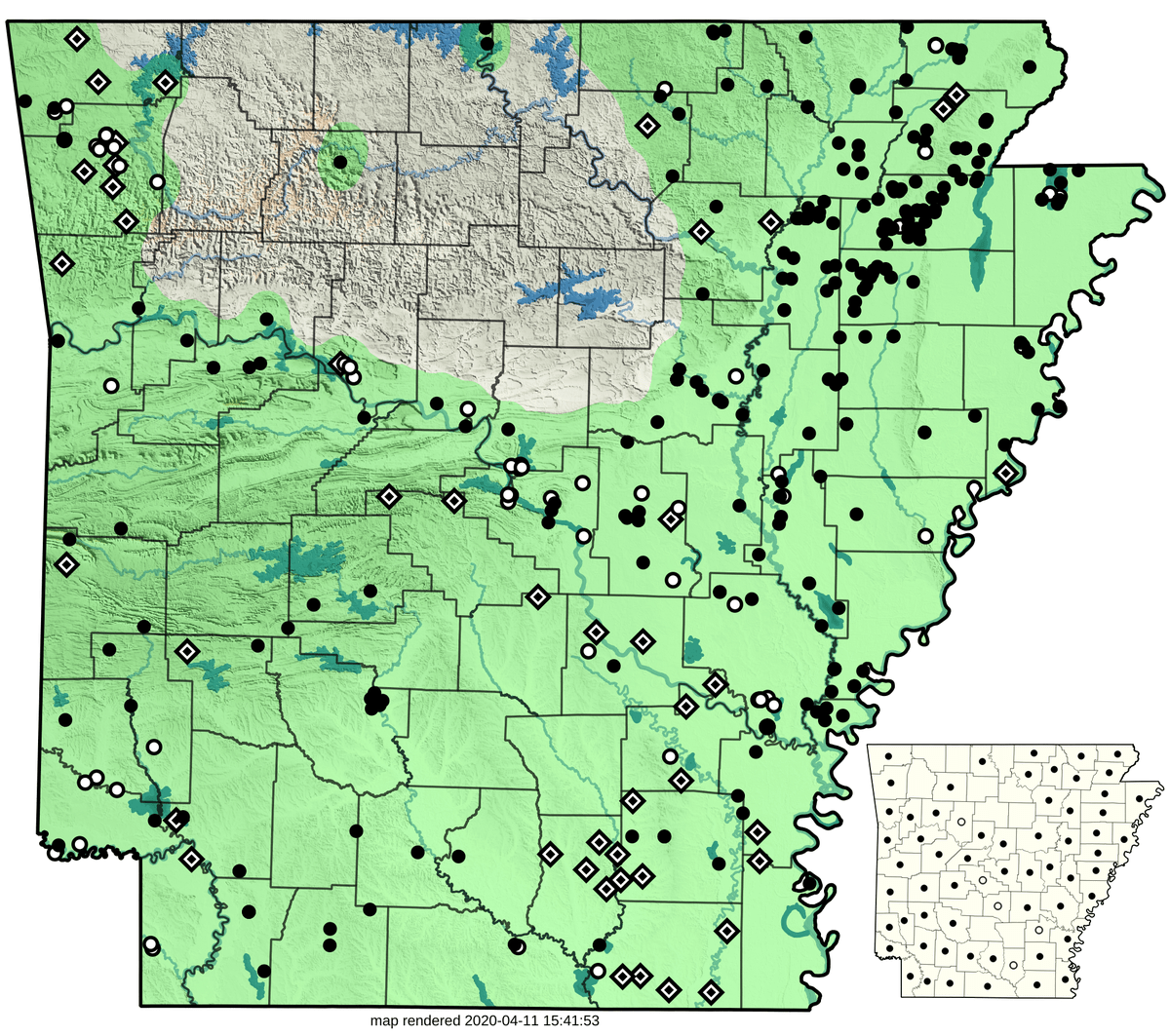
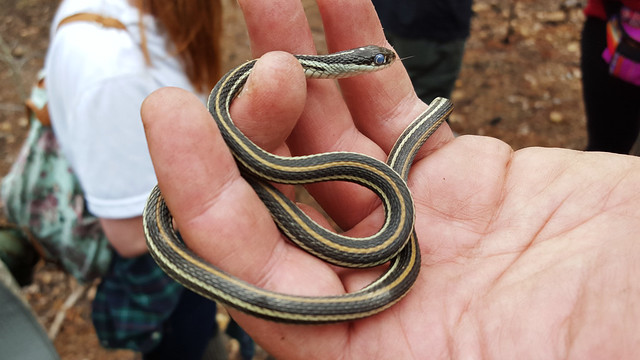
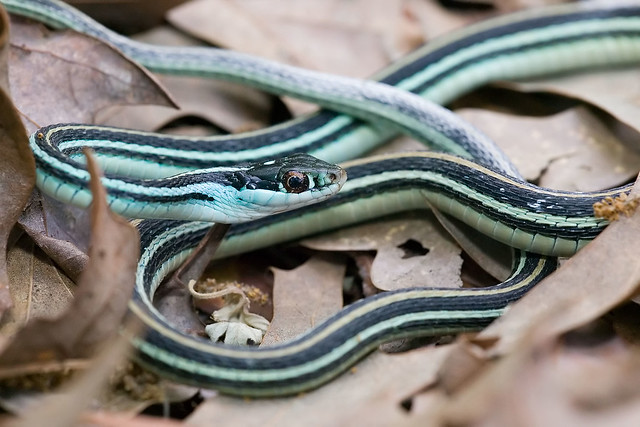
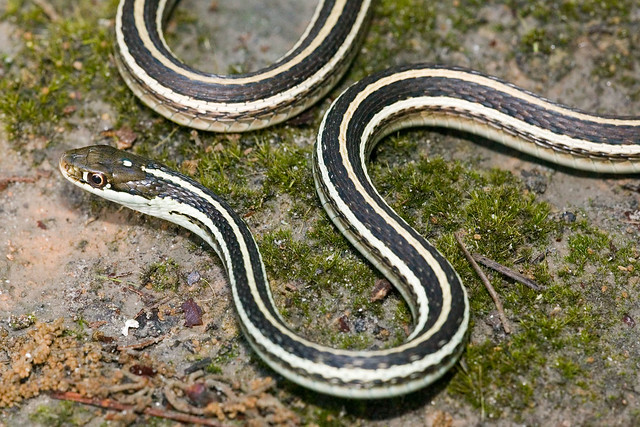
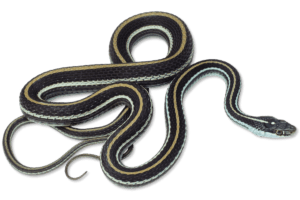
DescriptionThis medium-sized, very slender species is distinguished by the presence of three stripes. The dorsal stripe is typically orange while the lateral stripes are yellow. In some individuals, these stripes may be an icy-blue color. The background is usually black. The belly is patternless and cream-colored. This species can be distinguished from its sister-species, the Common Gartersnake (T. sirtalis), by the absence of dark, vertical bars on the labial scales and the presence of a light spot just in front of each eye. The Orange-striped Ribbonsnake is even more slender than the Common Gartersnake and has a significantly longer tail (about 1/3 of the total length). This species is also known as a Grass Snake, Garden Snake, Gardener Snake, or the like. ![]() HabitatsThis species is at home in a variety of habitats, but is usually associated with grassy areas around stiller bodies of water, such as ponds. It is not uncommon to encounter this species in suburban areas. Habits and Life HistoryEmergence from hibernation occurs in early spring. Breeding season occurs almost immediately afterward and continues through early spring. Individuals then spread out to forage. Females give birth to live young in late summer. Prey and Hunting TechniquesThis species eats a variety of different prey, including earthworms and other soft-bodied invertebrates, fish, frogs, and salamanders. The Orange-striped Ribbonsnake is an active, diurnal forager. Humans often encounter it as it prowls for food along fence lines, beside ponds, etc. Prey is neither constricted nor envenomated, but it may be shaken vigorously until subdued or simply grasped until the prey tires of struggling. Temperament and DefenseThis species is typically feisty when first captured, but usually tames down quickly. It does quite well as a pet though it may need plenty of space since it is an active snake. The primary defense for this species is evasion! As it slithers quickly through the grass, the stripes confuse a potential predator as to its direction. It is nearly impossible to keep track of whether you are chasing the head or tail! If captured, it may thrash about trying to escape. ConservationDespite frequent encounters with humans, this species is relatively common and abundant. Many people recognize this species as harmless and leave it alone. State Distribution and Abundance
GalleryContributors
Bibliography
Discussion |